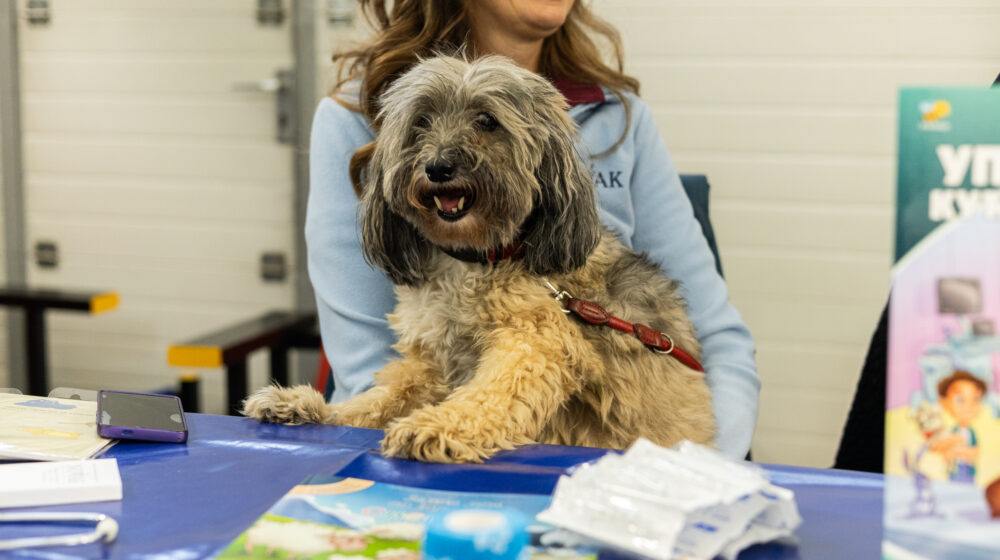


HEART project activities focus on raising awareness of the links between human, animal and environmental health.
Funder: European Union through the Horizon Europe Programme-Marie Skłodowska-Curie Actions (MSCA)
Project Coordinator: Diana Lupulović, PhD in Veterinary Sciences, Principal Research Fellow-Institute for the Application of Nuclear Energy INEP
Consortium:
Institute for the Application of Nuclear Energy INEP, University of Belgrade, Belgrade-Lead Organisation (Coordinator)
Institute for Medical Research, National Institute of Republic of Serbia, University of Belgrade, (IMI), Belgrade
Faculty of Agriculture, Department of Veterinary Medicine, University of Novi Sad, Novi Sad
Provincial Institute for the Protection of Cultural Heritage Petrovaradin (PZZZSK), Novi Sad
Center for the za Promotion of Science (CPN), Belgrade
Project Overview and Objectives:
The HEART project is implemented within the framework of the European Researchers’ Night (ERN) and Researchers at Schools (RAS) programmes under Horizon Europe. Running from 2026 to 2027, the project aims to bring science closer to citizens through interactive activities that increase its accessibility, visibility, and relevance to society. The project focuses on the interconnected relationships between humans, animals, and the environment, with particular emphasis on zoonotic diseases, climate change, food safety of animal-origin products, urbanisation, and biodiversity conservation. At the same time, HEART explores the historical, cultural, and social dimensions of human–animal relationships.
The project is grounded in the World Health Organization’s One Health approach, which recognises the interdependence of human, animal, and environmental health. By promoting an integrated perspective on these interconnected domains, HEART highlights the need for coordinated responses to emerging global health and environmental challenges. The project also underscores the urgency of environmental protection and biodiversity conservation, recognising that healthy ecosystems play a vital role in disease prevention and the long-term sustainability of life on our planet.
Primary Objective of the HEART Project:
The HEART project aims to strengthen the connection between science and society by demystifying the role of researchers, fostering curiosity and public trust in science, and increasing the accessibility, visibility, and relevance of scientific research to everyday life. At the same time, the project seeks to inspire young people to pursue careers in STEAM fields, particularly in medicine, veterinary medicine, biology, ecology, and the arts, through practical and interactive learning experiences. In doing so, the project promotes inclusiveness and equal access to science by enhancing scientific literacy and engaging pupils, students, children with special needs, and underrepresented groups, including blind and visually impaired persons as well as residents of rural areas. Through these activities, HEART contributes to strengthening the relationship between science and society while highlighting the importance of European research and innovation for addressing real-world challenges and improving quality of life.
Project Motto
“One Heart for Science”
The HEART Project Approach:
The HEART project brings together awareness-raising campaigns, school-based activities, public events, laboratory visits, panel discussions, workshops, exhibitions, webinars, debates, and hands-on experiments with the aim of connecting science with society and inspiring citizens to take an active interest in scientific research.
The activities are implemented through the European Researchers’ Night (ERN) and Researchers at Schools (RAS) programmes, in collaboration with researchers, teachers, non-governmental organisations, representatives of industry (including the food, pet food, and veterinary sectors), and local communities across Serbia. The project involves continuous cooperation with 15 cities across Serbia, supported by the Centre for the Promotion of Science (CPN) and the network of Science Clubs, as well as regional collaboration with partners from Hungary and Bosnia and Herzegovina, thereby strengthening European and regional scientific cooperation and enhancing the visibility of research activities.
The central event of the project is the European Researchers’ Night, held on the last Friday of September in Belgrade and Novi Sad, across museums, cultural centres, and public venues. The programme engages visitors of all ages through experiments, presentations, quizzes, and interactive activities, encouraging them to explore key topics in medicine, biology, chemistry, physics, and environmental protection, with a particular focus on the relationship between humans, animals, and the environment.

The programme also includes a range of associated activities: Open Science Day featuring guided visits to research laboratories; the international webinar “Under the Sea” dedicated to the aquatic world; the panel sessions “Girls’ Day” and “Women in Science”; a workshop on diseases transmitted by ticks and other disease vectors in nature; The Pet Show combining a pet exhibition with a public discussion on animal welfare and adoption; a public forum dedicated to the role of specially trained dogs in society, including dogs trained for search and rescue operations, public service duties, and assistance to blind and visually impaired people; a cave-based workshop focused on bat research; and a psychological forum addressing mental health and human-animal relationships.
Furthermore, young researchers showcase their work through poster sessions, while informal formats such as “Coffee with Scientists” enable direct interaction between researchers and the public. All activities are inclusive and accessible to diverse social groups, including people with disabilities, with the aim of strengthening scientific literacy and fostering long-term public engagement in science.